Exploring Atomic Design: A Deep Dive into Modular Web Development
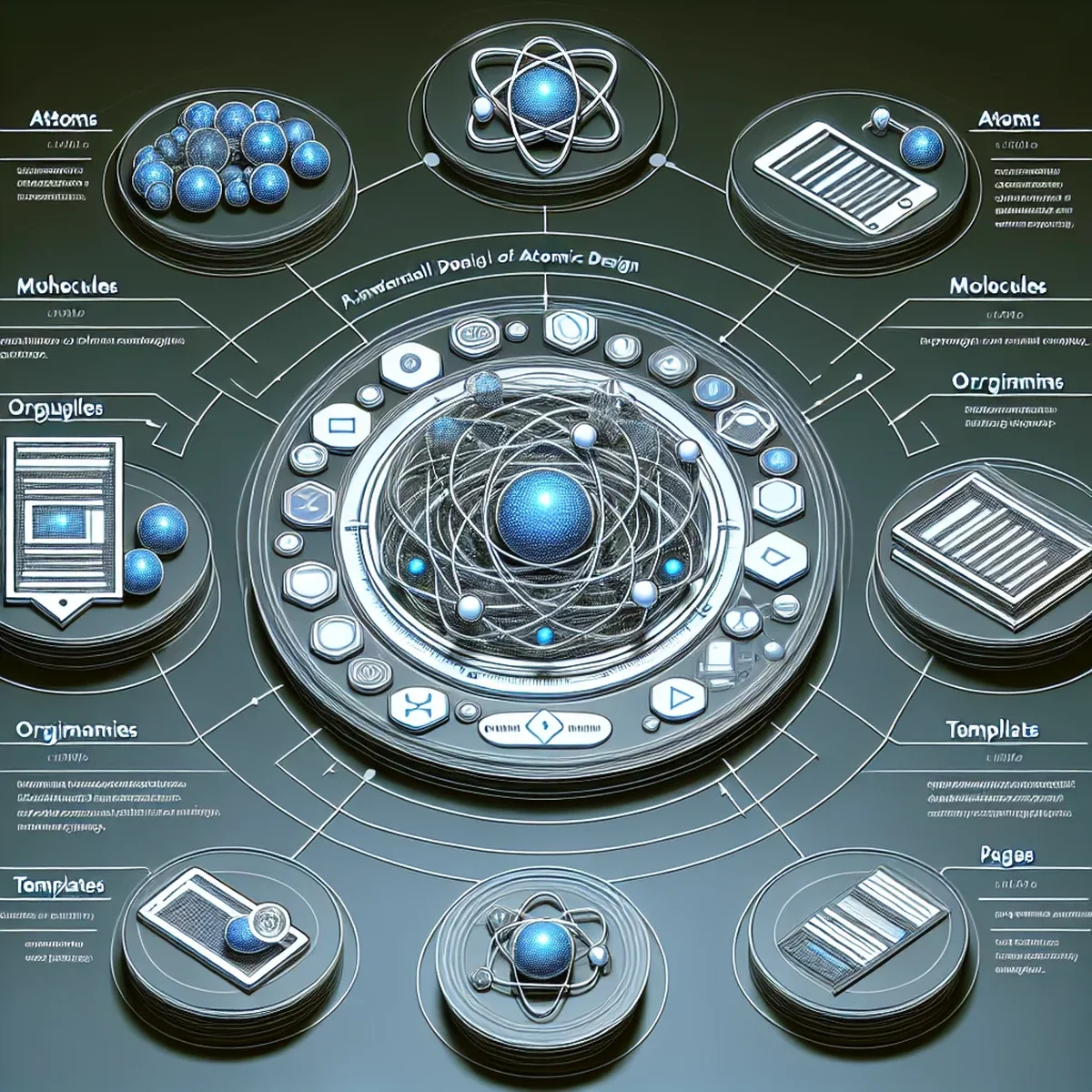
Atomic Design is a methodology developed by Brad Frost that has revolutionized the way digital teams approach website and app interface design. By breaking interfaces down into fundamental building blocks, Atomic Design allows for a more organized, scalable, and maintainable approach to web development. This methodology not only enhances the efficiency of the design process but also improves the consistency and quality of the end product.
Understanding the Five Stages of Atomic Design
Atomic Design is structured around five distinct stages: atoms, molecules, organisms, templates, and pages. Each stage builds upon the one before it, creating a hierarchical structure that mirrors the natural world.
Atoms
Atoms are the basic building blocks of matter. In web design, these are the HTML tags, such as form labels, inputs, buttons, and others that can’t be broken down any further without ceasing to be functional.
Molecules
Molecules consist of groups of atoms bonded together and represent small, functional units of an interface. For example, a search form molecule might consist of a label atom, input atom, and button atom working together as a unit.
Organisms
Organisms are groups of molecules joined together to form a relatively complex, distinct section of an interface. For instance, a header organism could consist of diverse molecule components like a logo, navigation, and search form.
Templates
Templates focus on the placement of organisms within a layout. They provide a context and define the underlying content structure without being tied to actual content, allowing for versatility and adaptability in design.
Pages
Pages are specific instances of templates that show what a UI looks like with real representative content in place. This stage helps test the effectiveness of the design system’s components and the overall layout’s response to actual content.
Benefits of Atomic Design in Web Development
Implementing Atomic Design offers multiple benefits:
- Scalability: Easier to manage and scale projects as components can be reused extensively.
- Efficiency: Reduces the time needed to create new features and pages.
- Consistency: Ensures design consistency across different parts of the application.
- Rapid Prototyping: Facilitates quick mock-ups and prototypes, enabling faster iteration and feedback cycles.
Practical Applications and Examples
Many leading digital agencies have adopted Atomic Design, integrating it into their workflow to improve collaboration between designers and developers. For instance, a digital agency might use Atomic Design principles to build out a client’s e-commerce site, ensuring that each component, from product listings to checkout forms, is reusable and consistent.
How to Start Implementing Atomic Design
- Conduct a Component Audit: Review your existing designs and codebase to identify common elements that can be abstracted into atoms, molecules, and organisms.
- Define a Style Guide: Establish a style guide that aligns with the Atomic Design methodology to maintain consistency across designs.
- Build a Pattern Library: As you create new components, add them to a pattern library, which serves as a single source of truth for the entire project.
- Educate the Team: Ensure all team members understand the principles of Atomic Design and how to apply them effectively.
Atomic Design is not just a theoretical concept but a practical tool that can significantly enhance the way digital products are built. By adopting this approach, teams can create more durable, understandable, and cohesive interfaces that stand the test of time.
FAQ
- How does Atomic Design improve web development?
- Atomic Design streamlines the development process by breaking down interfaces into fundamental building blocks, making it easier to maintain and scale websites.
- Can Atomic Design be integrated with existing web projects?
- Yes, Atomic Design principles can be incrementally integrated into existing projects, allowing teams to gradually adopt its methodology without overhauling the entire system.